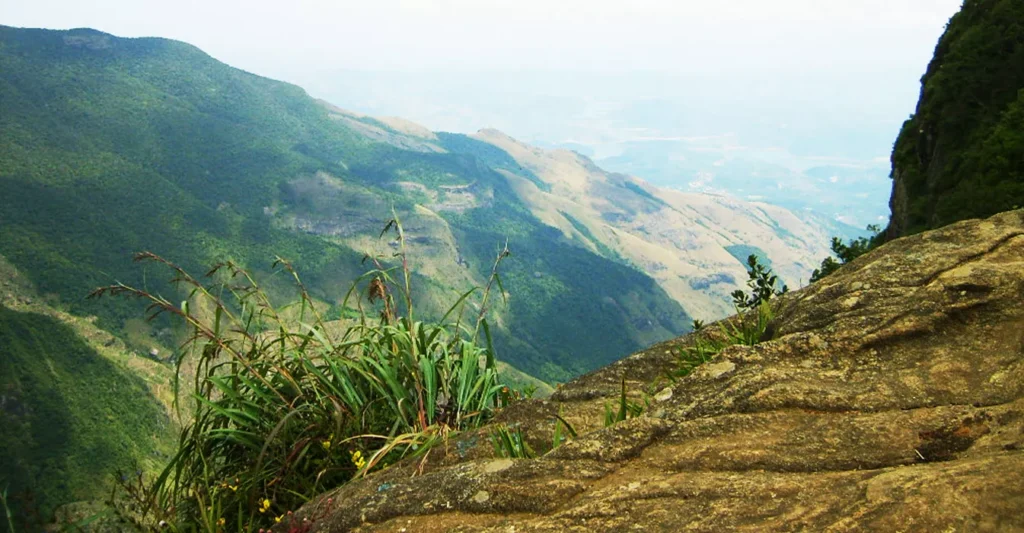
A Complete East Coast Travel Guide
Most travel guides tell you Sri Lanka’s beach season runs from December to March. That’s true — but only for one side of the island. If you’re planning a summer trip to Sri Lanka (May to September), the south and west coasts are in monsoon, and you should be looking east instead.
Sri Lanka sits between two monsoon systems, so while Colombo, Bentota, and Mirissa turn grey and rough between May and September, the east coast comes alive. This is when Arugam Bay, Trincomalee, Nilaveli, and Pasikudah get their calmest seas, clearest skies, and best swimming conditions of the year.
At VisitSriLankan.com, we’re based right on this coast — in Pottuvil, next to Arugam Bay — so this guide is built from local knowledge, not just research. Here’s our full ranking of Sri Lanka’s best summer beaches, along with the history, nearby attractions, hotels, and practical facilities (transport, markets, hospitals) you’ll need for each one.
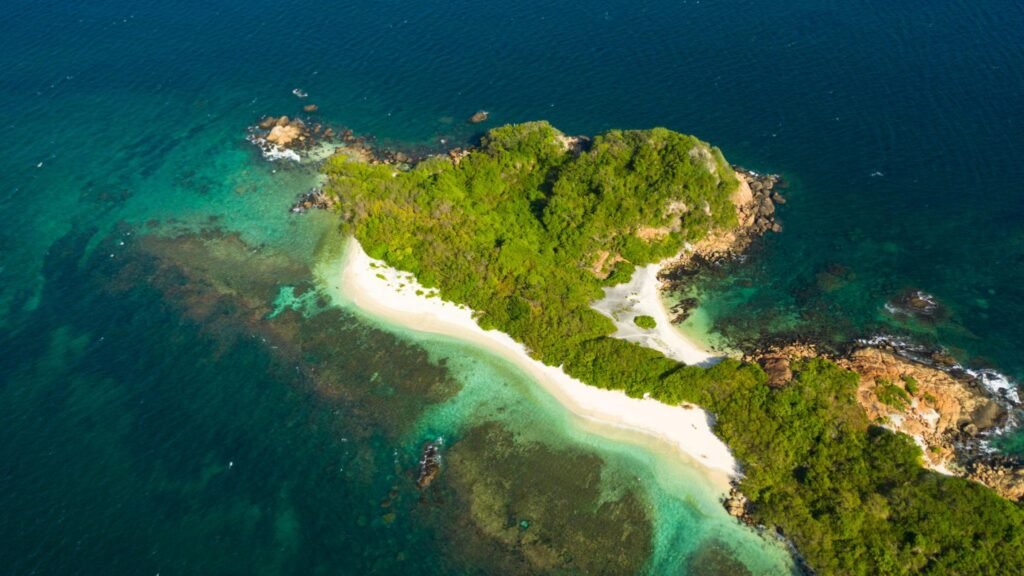
Why the East Coast Is Sri Lanka’s Best Summer Destination
Sri Lanka has two separate monsoon seasons that affect opposite coasts:
- Southwest monsoon (May–September): brings rain to the south and west coasts (Mirissa, Hikkaduwa, Bentota, Unawatuna)
- Northeast monsoon (October–January): brings rain to the north and east coasts
That means from May to September, the east coast enjoys dry weather, flat seas, and warm sunshine — exactly while the rest of the island is wet. This makes it the smartest choice for a Sri Lankan summer beach holiday.
Ranked: Best Beaches in Sri Lanka for Summer
1. Arugam Bay — Best for Surfing & Laid-Back Beach Life
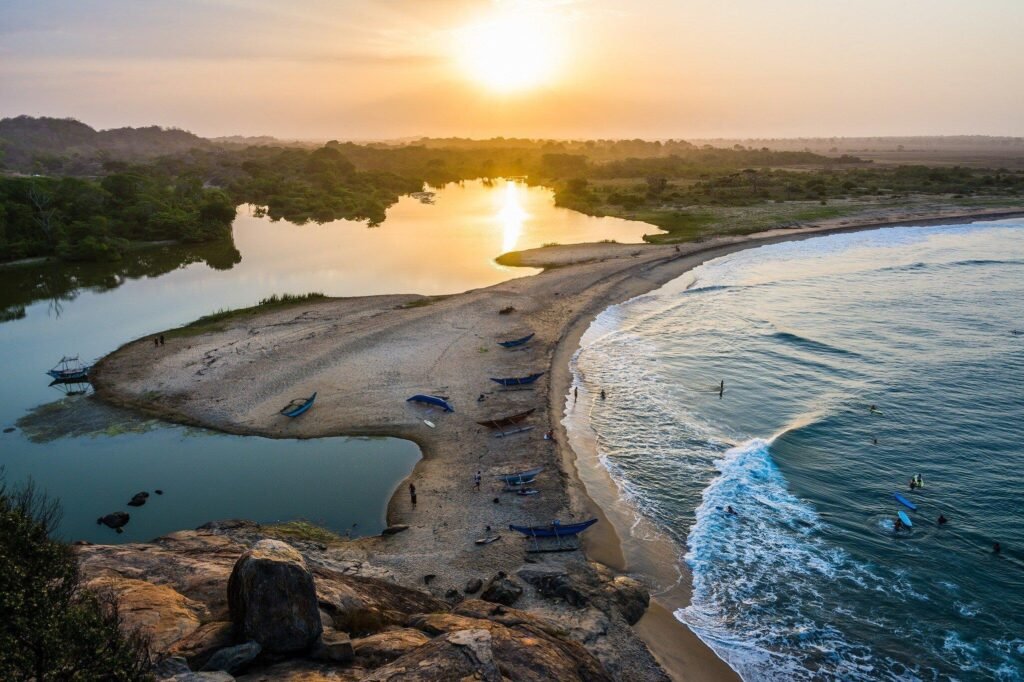
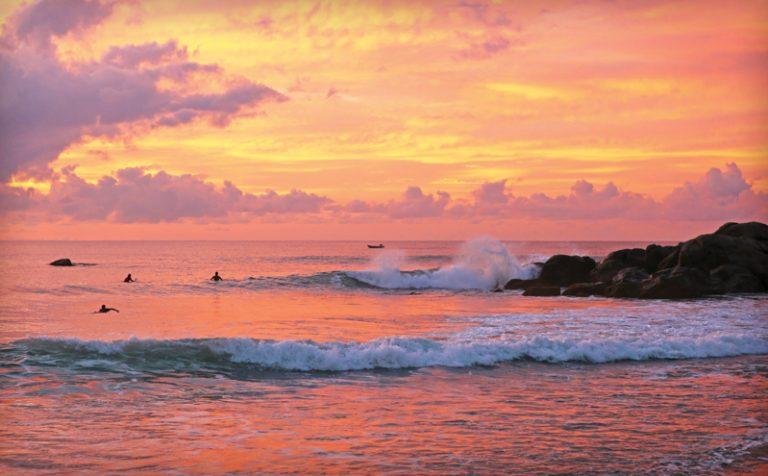
Arugam Bay is consistently ranked Sri Lanka’s number-one summer beach destination, and it’s the beach we know best.
History: Known locally as Arugam Kudah, the bay was historically part of the ancient Batticaloa Territory (Mattakallappu Desam). The area carries centuries of heritage — ruins near Pottuvil linked to the mother of the ancient warrior king Dutugemunu are still found near the ancient dunes and inside the nearby Lahugala sanctuary. Long isolated by poor roads and decades of civil conflict, Arugam Bay has only opened up to the wider world in the past 20 years, which is part of why it still feels so unspoiled.
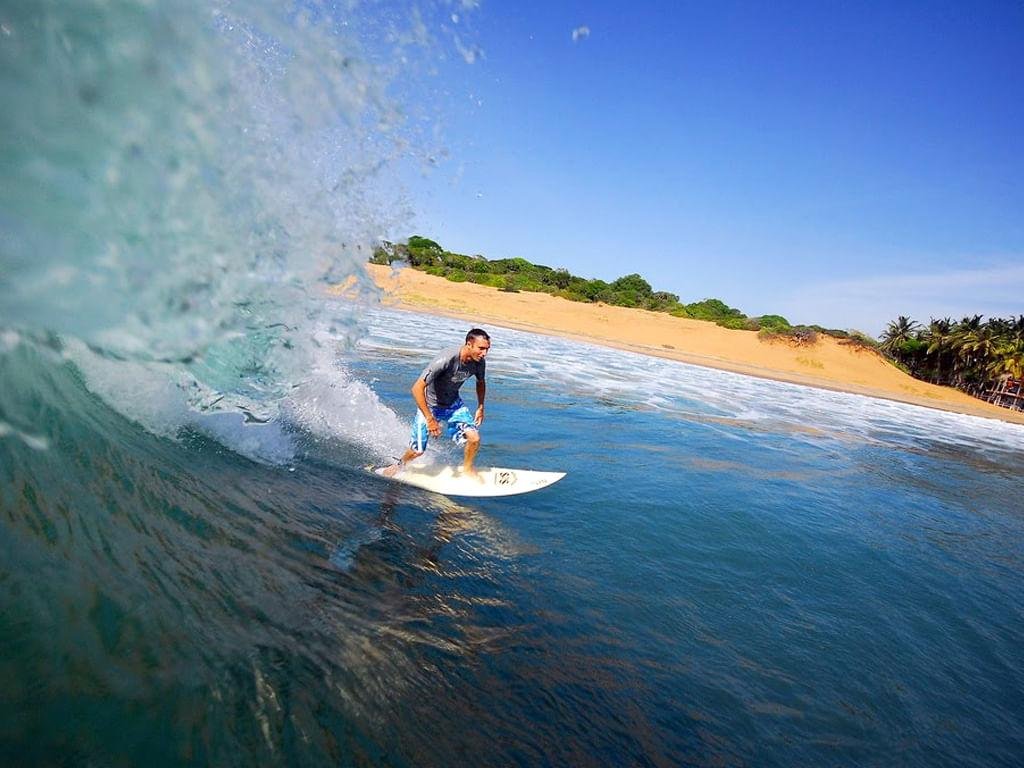
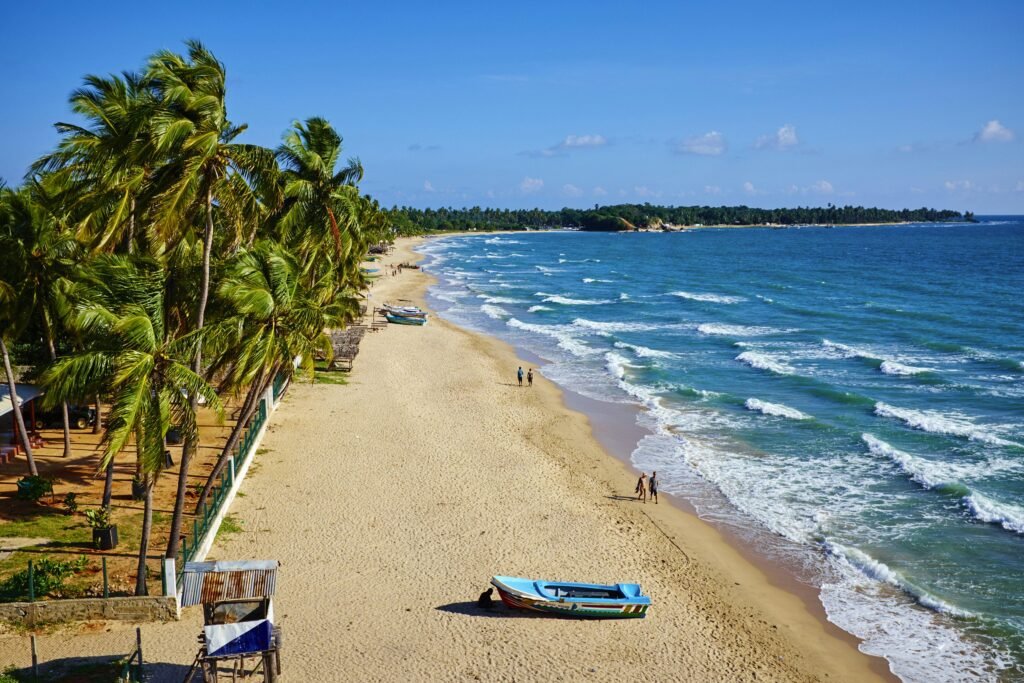
What makes it special: World-class point-break surf (peak season April–October), a relaxed backpacker-meets-boutique vibe, golden sand, and legendary sunsets. Surf breaks range from beginner-friendly to advanced spots like Whisky Point and Pottuvil Point.
Nearby attractions:
- Kumana National Park – jeep safaris for elephants, leopards, and 200+ bird species
- Lahugala National Park – large wild elephant herds
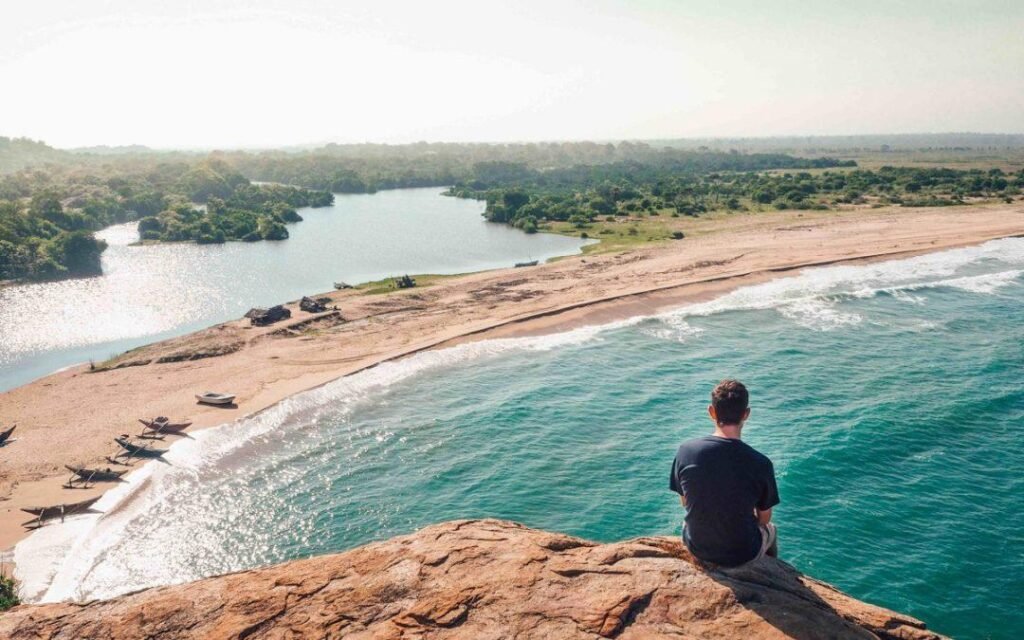
- Pottuvil Lagoon – mangrove boat safaris with crocodiles and birdlife
- Kudumbigala archaeological reserve – 12th-century monastic caves
- Okanda Temple – an ancient shrine on a rocky outcrop with legendary links to Sinbad the Sailor
- Muhudu Maha Viharaya – a 2nd-century BCE Buddhist ruin
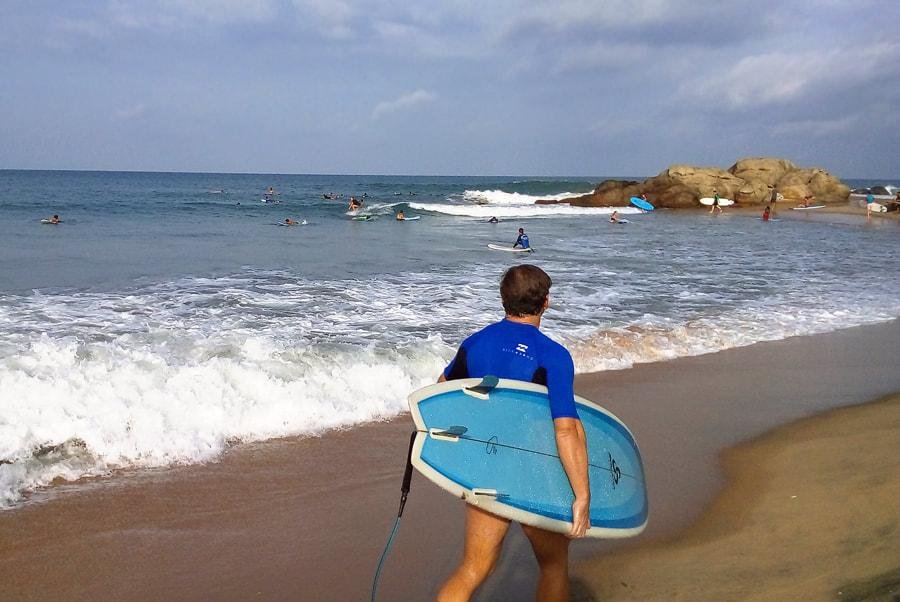
Hotels: Options range from beachfront luxury cabanas to mid-range boutique stays and social backpacker hostels, mostly strung along the beach road south of Pottuvil.
Markets & town: Pottuvil, about 4 km north, is the commercial hub — the place for banks, shops, tailors, and hardware, and where you’ll find handloom textiles, mats, and baskets sold in small local markets. Arugam Bay’s own main street has surf shops, cafés, and casual restaurants.
Transportation: Reachable by private taxi/tuk-tuk, long-distance bus, or train to Ampara district followed by road transfer. Colombo to Arugam Bay is roughly 320 km by road.
Hospitals: Pottuvil Base Hospital is the main government hospital, recently upgraded with a new surgical complex, emergency unit, and blood bank. Arugam Bay itself has a government clinic and a private clinic; Pottuvil also has a private clinic and pharmacy.
2. Nilaveli & Uppuveli (Trincomalee) — Best for Families & Snorkeling
History: Trincomalee is one of the world’s finest natural deep-water harbours and has been fought over for centuries — by the Portuguese, Dutch, French, and British. The town’s landmark, Fort Frederick, was originally built by the Portuguese in 1623 using rubble from the destroyed Koneswaram Temple, then rebuilt by the Dutch and expanded by the British into the Eastern Province’s administrative hub.
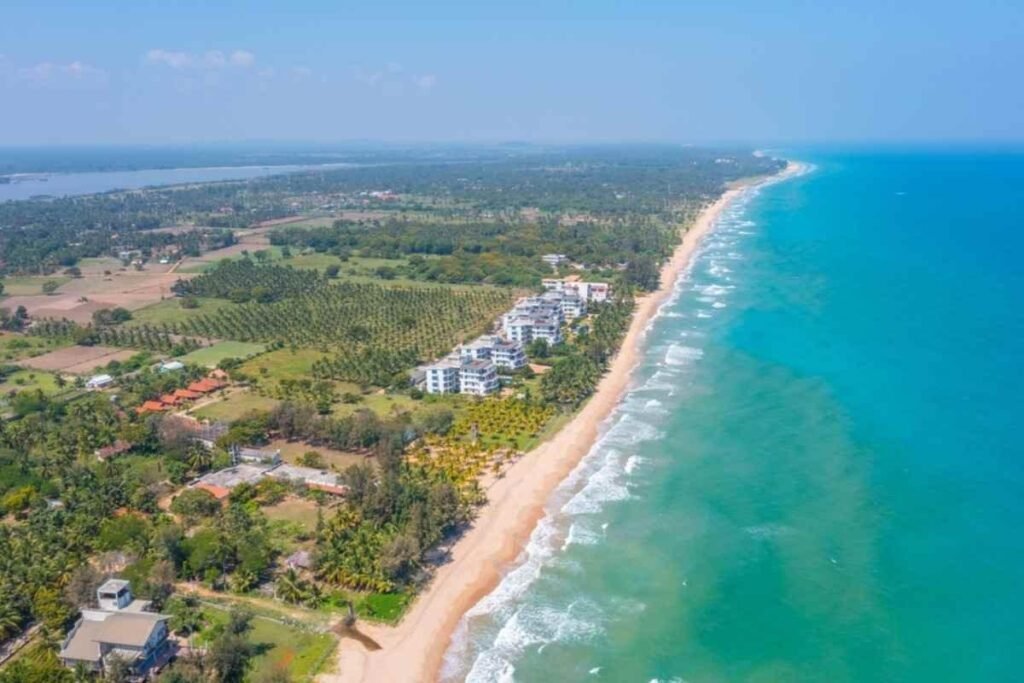
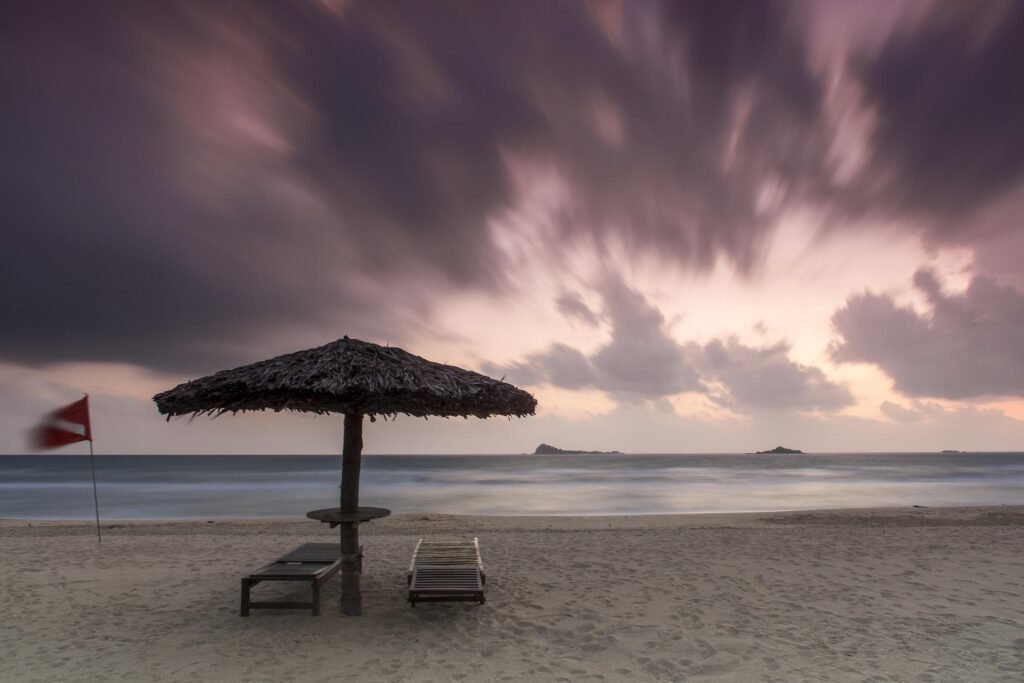
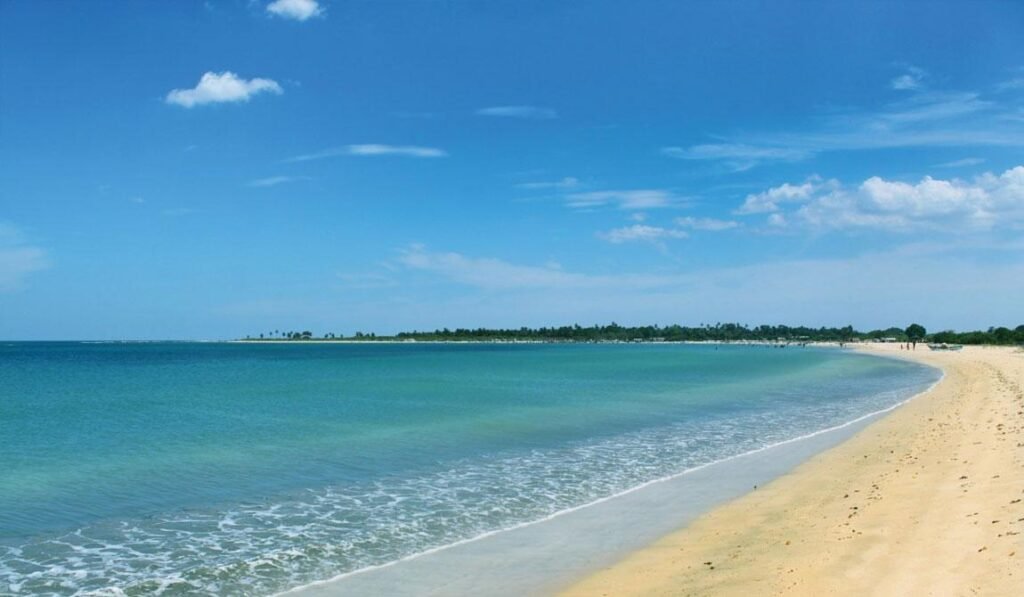
What makes it special: Wide stretches of powder-white sand, calm turquoise water, and some of the best snorkeling and diving in the country. Nilaveli Beach stretches about 4 km, backed by jungle.
Nearby attractions:
- Pigeon Island National Park – coral reefs, reef sharks, and hawksbill turtles
- Koneswaram Temple – a revered Hindu shrine atop Swami Rock with sweeping ocean views
- Fort Frederick – colonial fortress with a cemetery, Governor’s Mansion, and panoramic harbor views
- Kanniya Hot Springs – natural hot-water wells
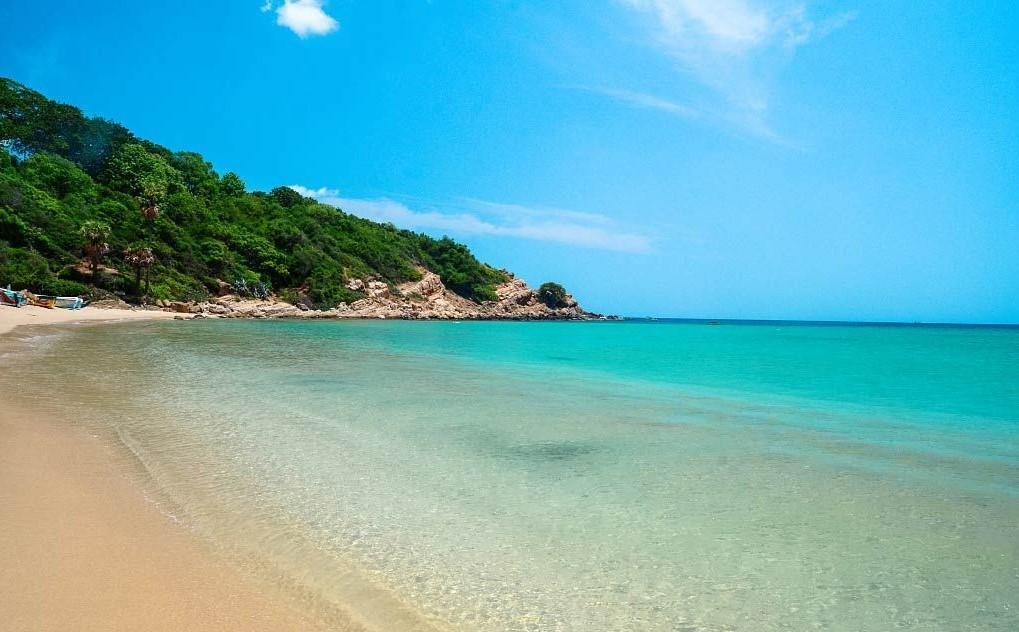
- Marble Beach – a secluded, jungle-fringed cove nearby
Hotels: Trincomalee and Nilaveli have everything from beachfront resorts (e.g., resorts directly on Nilaveli Beach) to mid-range hotels in Trinco town, many within walking distance of the fish market and Fort Frederick.
Markets & town: Trincomalee town centers around a clock tower and central bus station, with a lively fresh fruit and vegetable market, a separate fish market, and streets full of textile and tailor shops.
Transportation: Trincomalee is well connected by train and bus from Colombo and Kandy; China Bay Airport also serves the area. Nilaveli/Uppuveli are a short tuk-tuk or taxi ride north of Trinco town.
Hospitals: Trincomalee has a government General Hospital serving the district, along with private clinics and pharmacies in the town center.
3. Pasikudah & Kalkudah — Best for Calm, Shallow Swimming
History: Kalkudah, whose name comes from a Tamil term meaning “rock bay,” is a coastal resort town roughly 35 km northwest of Batticaloa. Like much of the east coast, tourism here was badly damaged by the 2004 Indian Ocean tsunami, but the area has since rebuilt into one of the region’s most popular resort strips.
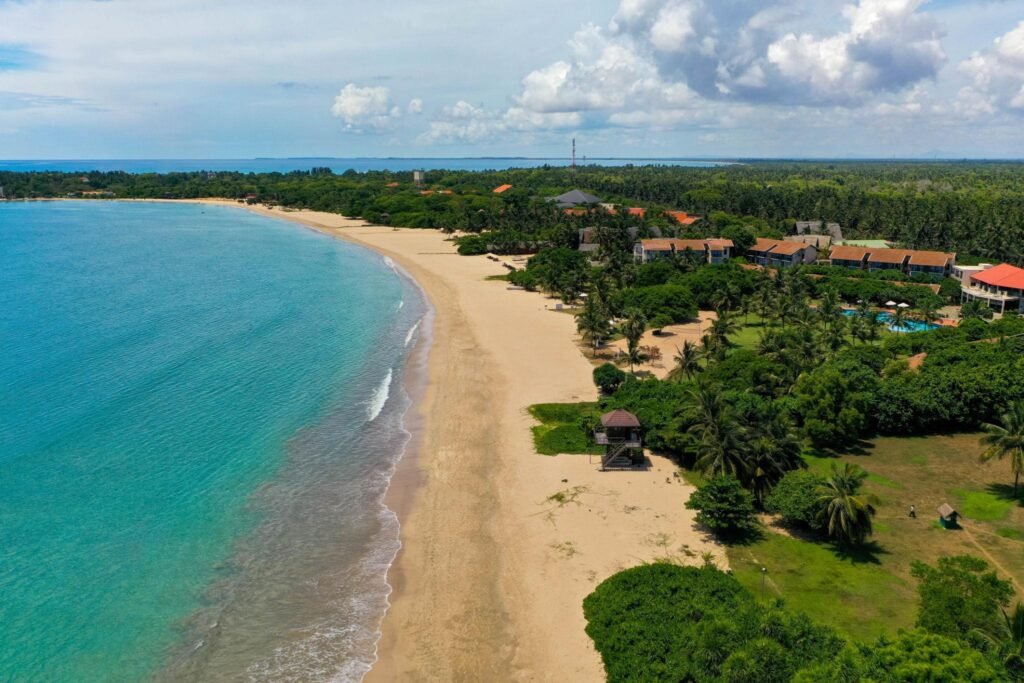
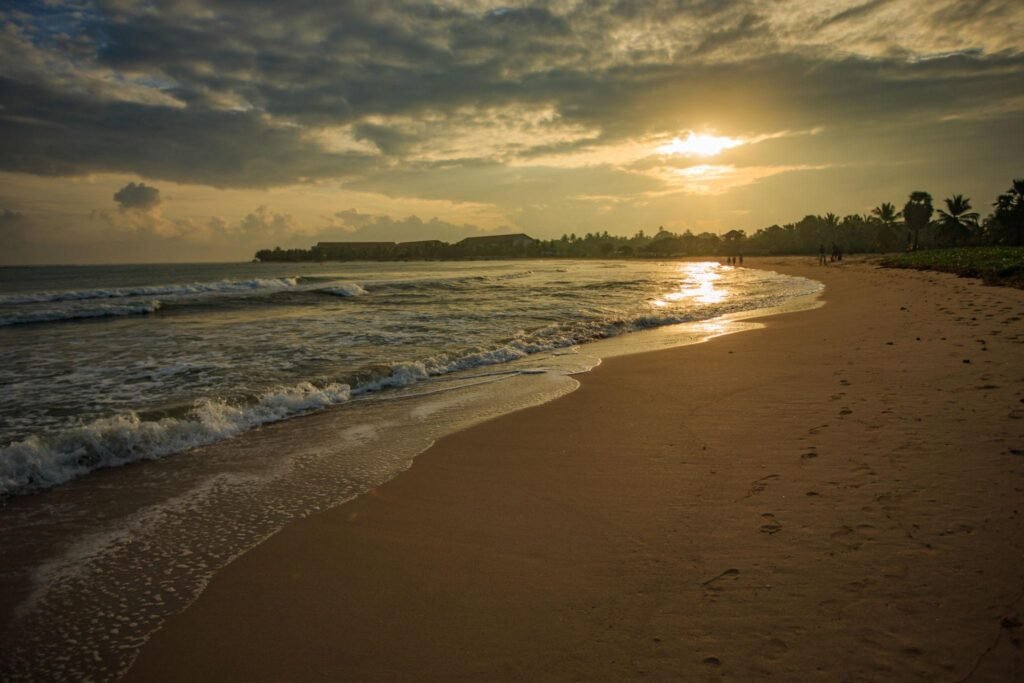
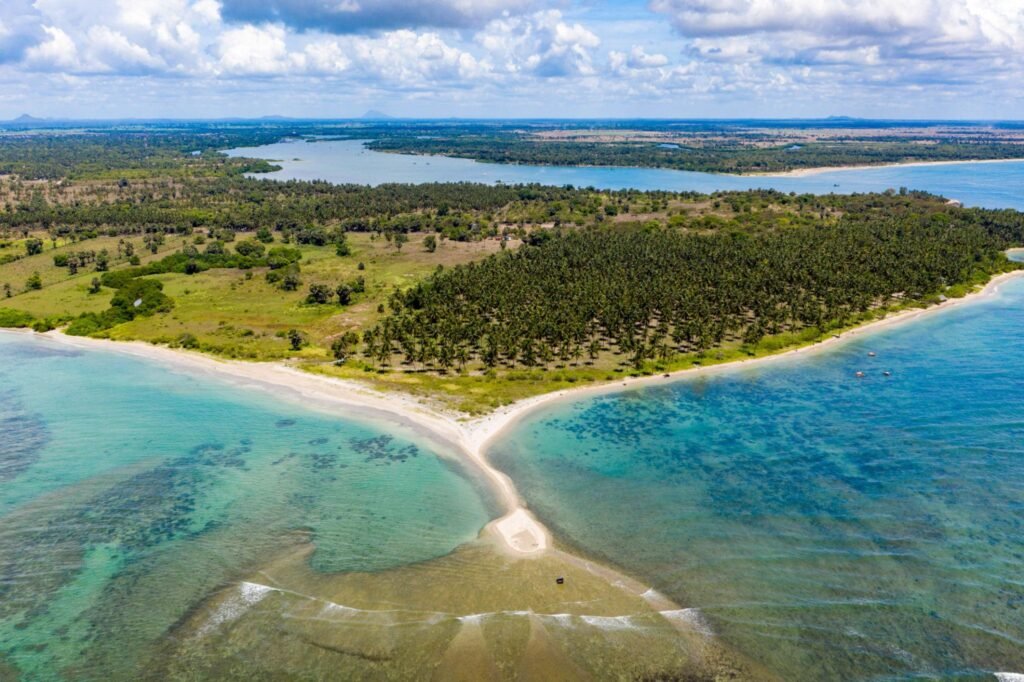
What makes it special: Pasikudah is famous for its shallow, horseshoe-shaped bay with unusually calm, warm water — ideal for families, children, and inexperienced swimmers. Kalkudah, just next door, offers a longer, wilder 4 km stretch of golden sand backed by coconut palms.
Nearby attractions:
- Batticaloa Lagoon and Batticaloa Fort
- Batticaloa Lighthouse – built by the British in 1913
- Elephant Rock Beach – a sandstone rock naturally eroded into an elephant-like shape
- Kallady Beach and Saint Nicholas Church, Chenkalady
- Day trips to Polonnaruwa’s ancient ruins and Minneriya/Kaudulla for elephant safaris
Hotels: This stretch is home to some of the east coast’s most polished resorts, from 5-star beachfront properties to boutique glamping-style stays and simple guesthouses.
Markets & town: Batticaloa town, about 30 minutes away, has the main markets, shops, and the historic Batticaloa Fort area. The small town of Valaichchenai is the nearest local hub to Kalkudah/Pasikudah itself.
Transportation: Daily trains run from Colombo Fort Station to Batticaloa, from which it’s a short taxi or bus ride to Pasikudah/Kalkudah. Regular buses also run from Batticaloa’s main bus station.
Hospitals: Batticaloa Teaching Hospital is the main referral hospital for the district; smaller government and private clinics serve Valaichchenai and the resort area directly.
Quick Comparison Table
| Beach | Best For | Peak Season | Nearest Hospital Town |
|---|---|---|---|
| Arugam Bay | Surfing, nightlife, backpacker vibe | April–October | Pottuvil |
| Nilaveli/Uppuveli | Families, snorkeling, diving | May–September | Trincomalee |
| Pasikudah/Kalkudah | Calm swimming, luxury resorts | May–September | Batticaloa |
Practical Travel Tips for the East Coast in Summer
- Best months: May to September for the driest, calmest conditions across all three areas.
- Getting there: Fly into Colombo (Bandaranaike International Airport), then travel by private car, bus, or train. Arugam Bay is roughly 6–7 hours by road from Colombo; Trincomalee and Pasikudah are closer, around 4–5 hours.
- Getting around locally: Tuk-tuks and small taxi services are the easiest way to move between beaches, markets, and attractions within each town.
- Money & connectivity: Carry cash for smaller towns like Pottuvil or Valaichchenai, where card facilities can be limited; ATMs are available in the main towns (Trincomalee, Batticaloa, Pottuvil).
- Health & safety: Each area has at least one government hospital plus private clinics for tourists — details listed above for each beach. Basic travel insurance is strongly recommended given some facilities are limited outside main towns.
- Pack for the sun: Reef-safe sunscreen, a hat, and light cotton clothing — the east coast in summer is hot, dry, and sunny with little rain.
Final Word
If you’re chasing sun, calm seas, and fewer crowds this summer, Sri Lanka’s east coast — Arugam Bay, Nilaveli, and Pasikudah — is where the good weather actually is between May and September. Each stretch has its own character: Arugam Bay for surf and atmosphere, Nilaveli for snorkeling and family-friendly calm, and Pasikudah for shallow water and polished resorts.
For more detailed guides on transportation, hotel bookings, and things to do in each of these towns, browse the rest of our travel guides at VisitSriLankan.com.